Case studies Interview Query, 4 min read
Turning Content Into a $569K Revenue Engine
Role. Content Marketing Manager, head of marketing. Team of four contractor writers and a pool of three video editors, reporting into a company of a CEO, a product engineer, and a product analyst.
- $569K+
- attributable revenue
- 200K → 300K+
- clicks per quarter
- 35 → 45
- domain authority
Context
When I joined Interview Query, content was already the main acquisition channel, driven primarily by SEO: about ~200,000 clicks per quarter from organic search, roughly ~$40,000/month in revenue, with strong on-page content but weak off-page authority. On paper, things looked solid. In reality, growth had stalled.
The core problems:
There was an SEO plateau, so traffic and revenue weren’t growing. Conversion efficiency was low: high traffic, but not all of it monetized. Authority signals were weak, with limited off-page presence. And there was an emerging threat: AI search (AEO) reducing clicks via direct answers. We weren’t just competing on Google anymore. We were competing on where people get answers.
Insight: Not All Traffic Is Equal
The biggest shift came from analyzing where revenue was actually coming from. High-traffic content like SQL, Python, and general tutorials drove volume, but company- and role-specific queries drove conversions. “SQL interview questions” pulled high traffic and low conversion, while “Amazon Data Scientist interview questions” pulled lower traffic but high purchase intent. At the same time, YouTube users showed high intent and conversion likelihood, and niche companies like consulting firms had less competition but strong demand.
Key realization:
Content should not be optimized for traffic. It should be optimized for intent tied to revenue.
Strategy: Build a Content System Around Intent
We shifted from general content production to a revenue-first content system.
1. Prioritize high-intent content
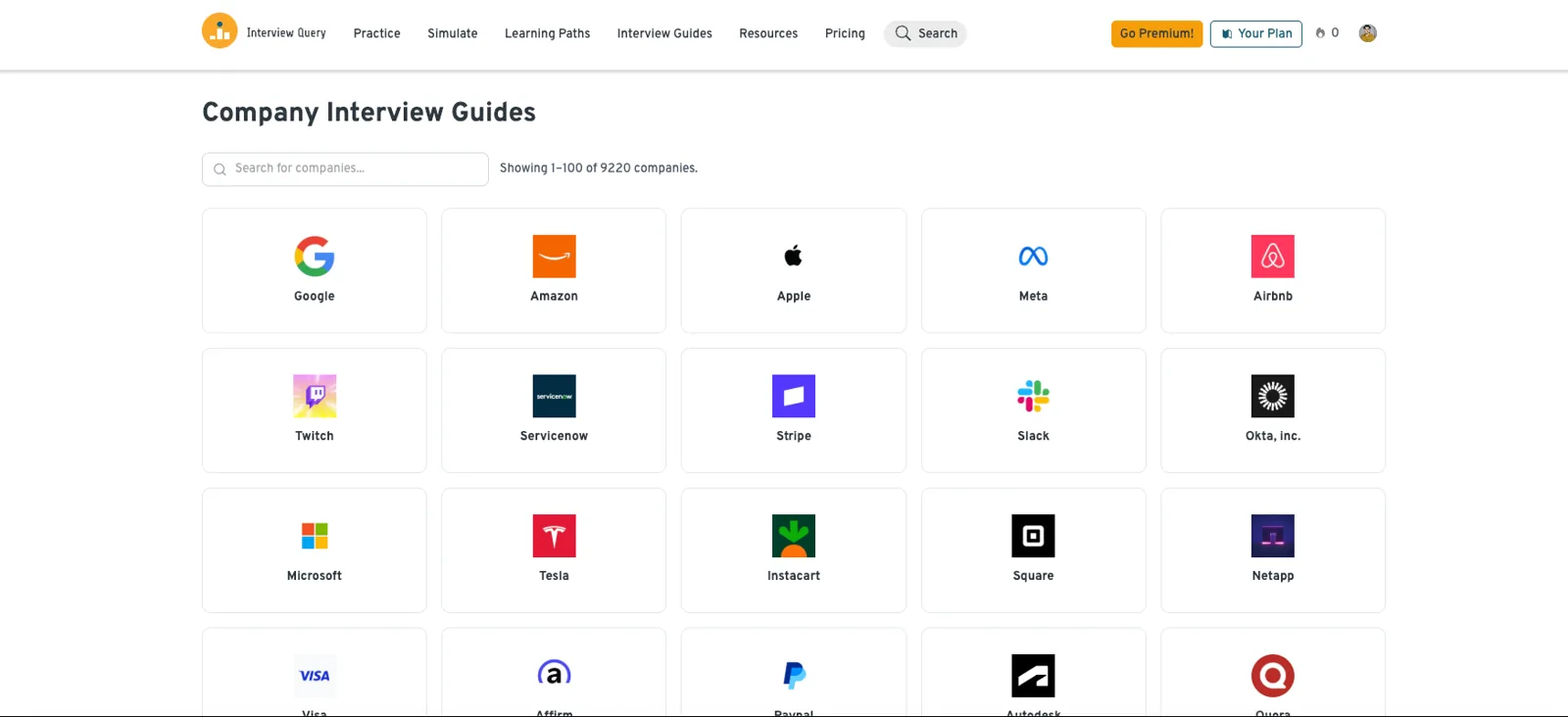
We focused heavily on company interview guides (Google, Amazon, and similar), role-specific queries (Data Scientist, Analyst, and similar), and industry-specific niche companies like DoorDash, BCG, and Bain. Instead of chasing volume, we chased conversion potential and search intent depth.
2. Build structured funnels, not isolated pages
We designed a clear path:
Search / Reddit / YouTube → Company Guide → Question Page → Signup → Paid
-
Company Interview Guide = entry point (SEO landing page)
-
Question Pages = conversion engine (interactive product experience)
This structure allowed users to:
- Discover → Explore → Experience → Convert
3. Expand programmatically, refine strategically
We scaled aggressively, from ~10,000 pages to 30,000+ pages. Not all pages were equal, so we layered quality by tier:
-
Top 100 companies → deeply optimized
-
Top 100–500 → solid coverage
-
Long tail → SEO-driven, lighter content
We also continuously refreshed high-performing pages every 3–6 months and pruned whatever underperformed.
4. Use data to guide every decision
We combined Google Search Console for real performance data with Ahrefs for opportunity discovery, then prioritized pages accordingly: high impressions with low clicks meant optimizing metadata, proven traffic potential meant improving content depth, and revenue potential meant prioritizing aggressively.
Distribution: Turning Content Into Authority
We didn’t rely on SEO alone. We built distribution loops that reinforced authority.
Reddit (High impact channel)
We used Reddit as both a traffic source and an authority builder: answering real user questions in relevant subreddits, referencing Interview Query naturally, and publishing original research from internal data. A single post could bring up to 20,000 clicks in 2 weeks, with multiple posts reaching thousands of upvotes. This created a flywheel: Reddit visibility → brand trust → more clicks; Reddit mentions → stronger SEO signals; stronger SEO → more traffic. Domain authority climbed from 35 → 45.
YouTube (High intent channel)
We tested multiple formats. Mock interviews worked initially but declined over time, while research-driven content proved most scalable. Top videos hit ~300,000 views, with research content consistently pulling 10K+ views. Educational content works, but market insights and research are what drive broader reach.
The highest-performing content here was job market insights, data-backed research, and company-specific breakdowns, content that reinforced brand authority across every other platform.
Conversion: Turning Visitors Into Revenue
Most content strategies fail here. We focused heavily on conversion mechanics.
1. Product-led conversion
Users landed on company guides for information and question pages for interaction. On question pages, they could solve problems, run code, and actually experience the product. That created natural conversion pressure without a hard sell.
2. Smart gating
We tested multiple triggers and found success with limiting usage (two free code runs, for example) before prompting signup. It worked because users were already engaged, and value had been proven before we asked for anything.
3. Strategic pop-ups
We implemented scroll-based pop-ups at the 50% mark and delayed prompts. Even with a slight UX trade-off, the conversion gains outweighed the drop-offs.
4. Post-signup monetization
After signup, users entered email flows, and many converted only after a delay of several days.
Conversion is not always immediate. Engagement compounds over time.
Results
Over my tenure:
-
$569K+ attributable revenue (Google Analytics)
-
Estimated additional ~$500K unattributed revenue (Stripe + other channels)
-
Revenue scaled from:
- ~$40K/month → $70K–$80K/month peak
Traffic:
- ~200K → 300K+ clicks per quarter
Channel contribution:
-
~70% SEO
-
~10% Reddit
-
~10% YouTube
-
Remaining from LinkedIn, Bing, AI platforms
Key wins
-
Niche content (e.g. consulting firms like BCG, Bain, McKinsey) → higher conversion, lower competition
-
Reddit research posts → massive traffic spikes + SEO lift
-
Company interview guides → core revenue drivers
Takeaway
Most teams optimize content for:
-
traffic
-
trends
-
intuition
What actually works:
Growth comes from identifying high-intent opportunities in your data and building content systems around them.
At Interview Query, we didn’t win by creating more content.
We won by:
-
Choosing the right content
-
Structuring it into a funnel
-
Distributing it strategically
-
And optimizing for revenue, not just clicks