Case studies Kelly App, 3 min read
Acquiring 23K Users in 2 Months While Reducing CAC by 40%
Role. Marketing Consultant, managing a team of five marketing interns.
- 23,000
- users in peak month
- ₱20 → ₱12
- cost per acquisition
- 200K+
- Facebook engagement
Context
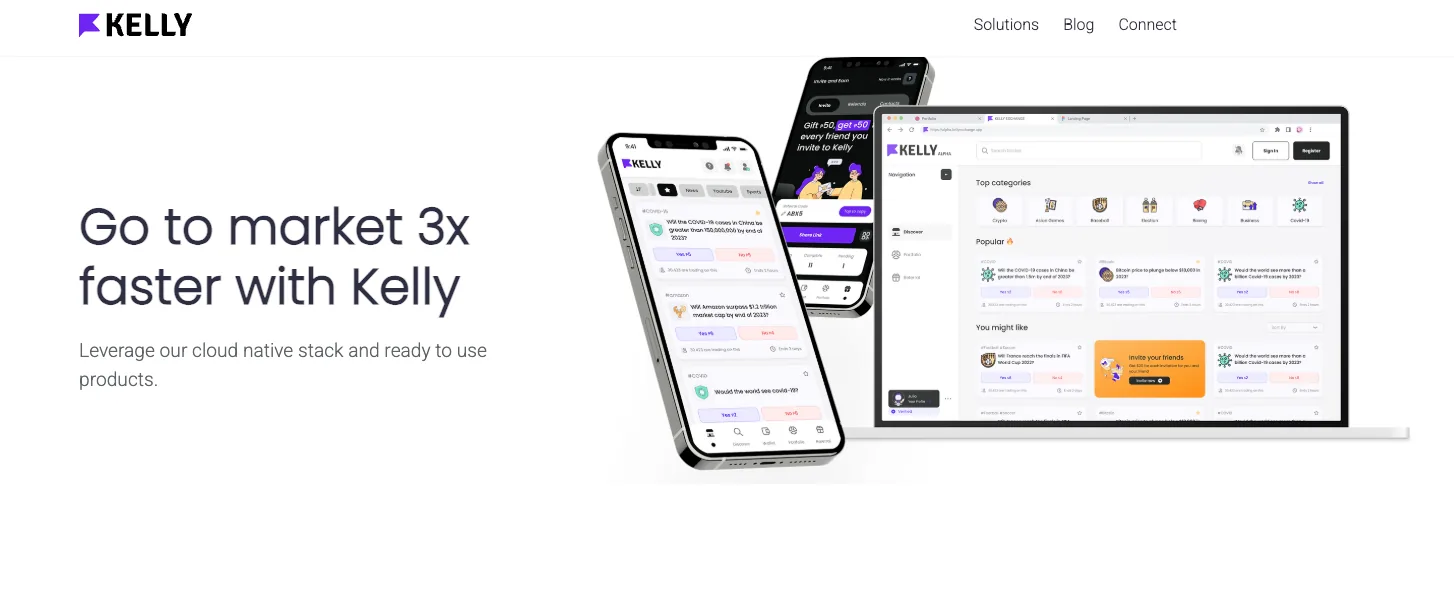
Kelly was an early-stage prediction market app entering the Philippines, where users predict real-world outcomes (weather, traffic, events, trends) and earn rewards for correct predictions. It was designed as a non-gambling alternative to betting platforms.
Constraints:
Monetization wasn’t possible yet, pending licensing. There was zero existing user base, no prior marketing system, and high skepticism. Many users perceived it as a scam outright. The goal wasn’t revenue yet. It was:
Acquire users early and build long-term adoption in a trust-sensitive category.
Challenge: Selling a Concept People Don’t Understand
We faced three core barriers.
1. Trust barrier
Being a finance-related product bred high skepticism on its own, and foreign founders added an extra layer of doubt, and users were hesitant to even try it.
2. Education barrier
“Prediction market” isn’t an intuitive term, and traditional content explained the concept instead of the behavior.
3. Audience problem
“Filipinos” was too broad a target, with no clear starting segment.
Insight: Don’t Teach the Product, Show It Through Culture
The initial approach, run by an agency, leaned on educational content: definitions, explanations, technical breakdowns. It didn’t work.
Shift:
Instead of explaining prediction markets…
We embedded the product into real-world events people already care about
Traffic in Metro Manila, celebrity trends, news events, weather predictions. That’s what made the product feel familiar, relevant, and engaging, instead of foreign and abstract.
Strategy: Build a Content-Led Acquisition Engine
1. Narrow the Audience (Critical decision)
We focused on college students: early adopters, highly active on social media, with strong long-term retention potential.
Win the user early, and you win them long-term.
2. Event-Based Content System
Instead of asking “what is a prediction market?” we asked “what’s happening right now?” and built content around trending events, relatable scenarios, and culturally relevant topics.
3. High-Velocity Content Formats
The top-performing format was the 1-minute news roundup video: fast-paced, multiple topics in one reel, high information density. Our best-performing video hit 89,000 views, with a consistent baseline of 1,000+ views per post.
Topic selection matters more than format optimization.
4. Incentive Design to Drive Action
Since monetization wasn’t allowed, we simulated value.
Phase 1: Micro-incentives
Mobile load rewards (₱5 for a set number of correct predictions) mimicked real-world currency behavior and brought in ~5,000 users.
Phase 2: High-stakes leaderboard
A monthly leaderboard competition, with an iPhone as the grand prize and vouchers or telecom credits as secondary rewards, supported by paid ads built around clear prize-driven messaging and simple participation mechanics.
Paid Strategy: CAC Optimization Through Relevance
We ran Meta ads to scale acquisition. What worked was prize-led creatives with the iPhone as the anchor, event-based messaging instead of technical explanations, and a clear user action: predict, then win. CAC dropped from ₱20 → ₱12 (~40% drop).
Better messaging and alignment, not lower spend.
Funnel: Awareness → Participation → Retention
-
Content: event-based, high-engagement
-
Ad: incentive-driven (leaderboard, rewards)
-
App: prediction mechanics and reward simulation
Results
-
23,000 users acquired in peak month
-
~5,000 users from initial incentive system
-
Social engagement:
- 200K+ on Facebook
-
84K+ on Instagram
-
CAC reduced:
- ₱20 → ₱12
Key Learnings
1. Content must match behavior, not logic
Educational content failed. Event-driven content worked.
2. Incentives must feel real
Mobile load worked because it’s “daily currency”. An abstract reward wouldn’t have landed the same way.
3. Retention matters as much as acquisition
Short-term monthly contests drove spikes but reduced long-term motivation. In hindsight, longer competitions with broader reward distribution would have served retention better.
Takeaway
The agency before us tried to explain what a prediction market is. We stopped explaining it and started showing it inside things people already followed: Metro Manila traffic, celebrity news, the weather. That single switch is what moved the product from “is this a scam?” to 23,000 users acquired in a single month.
What made it repeatable:
-
A single, narrow starting audience (college students) instead of “Filipinos”
-
Incentives that mimicked real currency (mobile load) before we could offer real money
-
Content built around “what’s happening now,” not “what is this product”
The one thing I’d change: our leaderboard contests were monthly and high-stakes, which spiked acquisition but didn’t hold retention. Longer contests with wider prize distribution would have kept more of those 23K users active past month one.