Case studies YourLifeChoices, 3 min read
Scaling a Newsletter to 1.15M Traffic and 100K Subscribers
Role. Newsletter Editor, part of a five-person team. Not the lead on this project, but had direct input into subject line strategy, content selection, and structure.
- 1.15M+
- traffic generated
- 60K → 100K+
- subscribers
- 8% → 9–10%
- click-through rate (peak 15%)
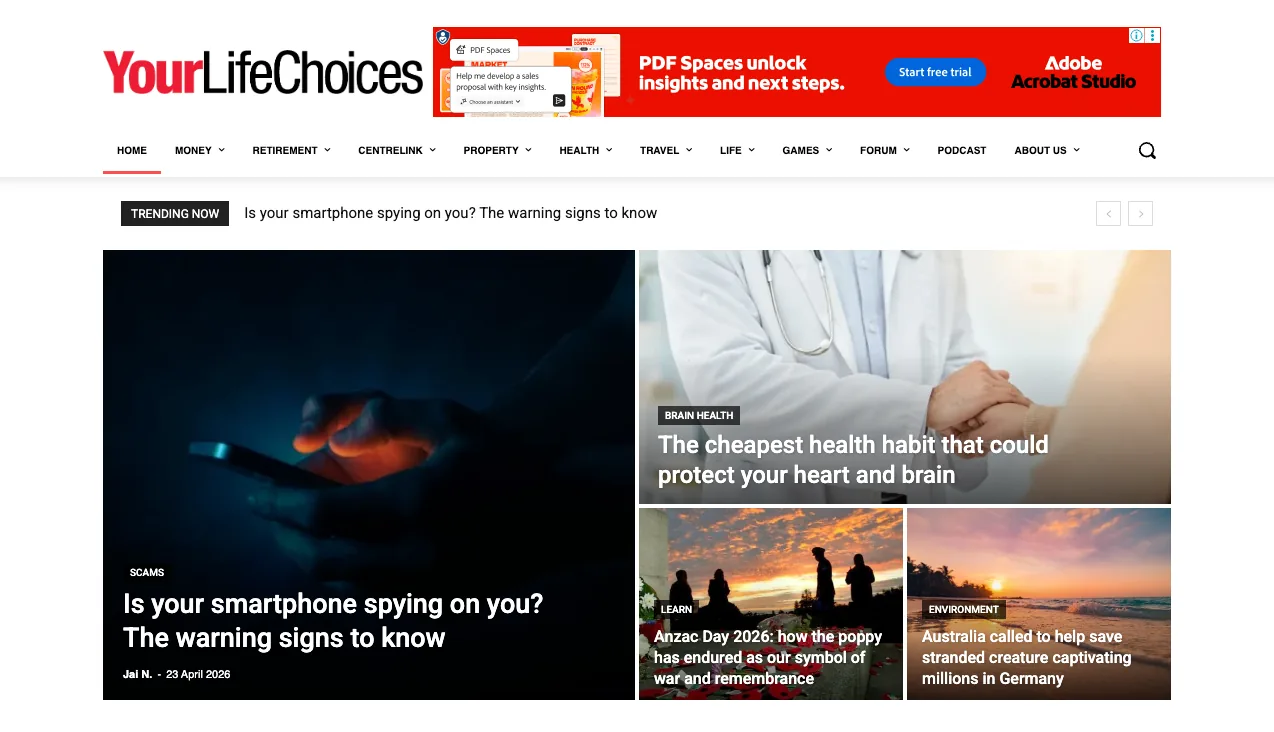
Context
YourLifeChoices is a long-running Australian publication targeting Australians aged 50+: retirees or those approaching retirement, interested in finance, superannuation, health, and everyday life updates. When I joined, it had ~60,000 email subscribers, a ~45% open rate, and a ~8% click-through rate. The newsletter was already active but stagnant in format and growth. The business had just been acquired and needed growth in subscribers, higher engagement, and a path toward monetization.
Challenge: Balancing Clicks vs Trust
The newsletter wasn’t broken. But it wasn’t evolving. The format had been static for over a year, there was no clear system for content optimization, and both engagement and subscriber growth had plateaued. More importantly:
The audience was highly sensitive. What drives clicks could also erode trust.
Insight: This Audience Is Emotional, Not Just Informational
Through testing and observation, we uncovered a critical behavior pattern: readers say they dislike fear-based content, but they consistently click on it. The top-performing topics were scams, product recalls, deaths (especially public figures), and fines, risks, and safety issues. But overusing fear reduced trust. Readers began emailing complaints, and engagement started to decline.
Key realization:
You can’t just optimize for clicks. You have to optimize for sustained reader trust and enjoyment.
Strategy: Build a Balanced, High-Engagement Newsletter System
1. Subject Line Strategy: Strength in Balance
Each subject line featured 4 key stories and was A/B tested against another variation.
Don’t create one “winner” and one weak version. Make both subject lines equally strong.
Since 50% of the audience sees each version, a weak variant means lost engagement at scale. CTR improved from ~8% to 9–10%, and open rates climbed to 48–50% consistently.
2. Content Structure: Designed for Click Behavior
Each newsletter followed a clear system: an introduction highlighting the top 4–5 stories, a main content list with all stories under clickable headlines, and engagement blocks (games, trivia, forums).
Critical optimization: Content balance
Initially, a heavy focus on fear-based content drove high clicks but declining trust. The fix was to alternate emotional weight: heavy (recall, death, scam), then light (lifestyle, tips, human stories), repeating that pattern issue after issue. Average clicks per user improved from ~3 to 3–4 stories per email, and overall engagement increased across the board.
3. Click Optimization Without Killing Curiosity
Instead of revealing everything upfront, we withheld key details and added context without full disclosure. Don’t name the recalled product, don’t reveal the person immediately, add descriptive intrigue instead. That combination of curiosity and variety drove clicks while keeping “content fatigue” down.
4. Audience-Aware Content Selection
We moved beyond the typical approach of pulling from RSS feeds and rewriting trending stories, upgrading instead to Google Trends + SEO insights, which let us identify rising topics early and capture traffic beyond email through SEO spillover.
Behavior-based timing (key insight)
Retail content (Woolworths, Kmart, Coles) performed best on weekends; the same content midweek underperformed.
Timing matters as much as topic.
5. Consistency System: Scaling 150+ Newsletters
At ~3 newsletters per week, we produced 150+ newsletters on a repeatable structure, a clear topic sourcing pipeline, and continuous testing and iteration. This wasn’t random writing. It was a repeatable content engine.
Results
During my time:
-
1.15M+ total traffic generated
-
Subscriber growth:
-
60K → 100K+ subscribers
-
Engagement:
- Open rate: ~45% → up to 60% peak
- CTR: ~8% → 9–10% average
- Best-performing email: 15% CTR
Key Wins
-
Balanced emotional + practical content → sustained engagement
-
Stronger subject line strategy → consistent performance gains
-
SEO-informed content → additional traffic beyond email
-
Behavior-based timing → improved click performance
Takeaway
Readers told us, directly, that they didn’t like fear-based stories: scams, recalls, deaths. They also clicked on them more than anything else. Sitting with that contradiction, instead of picking a side, is what shaped the whole system: alternate heavy stories with light ones, hold back details to earn the click without misleading, and treat both subject line variants as the “real” one since half the list only ever sees each.
None of it was a single fix. It was 150+ newsletters of testing that same tension in small ways. A slower way to grow a list, but the reason open rate climbed instead of trust eroding along with it.