Case studies Interview Query, 5 min read
Scaling a Founder's LinkedIn to 8.7M Impressions
Role. Content Marketing Manager and ghostwriter for CEO Jay Feng's personal LinkedIn. Owned the channel end to end (strategy, writing, publishing, and reporting) inside a company of a CEO, a product engineer, and a product analyst.
- 8.7M+
- impressions
- 30K → 50K
- followers
- $300K
- annual revenue from 10 university partners
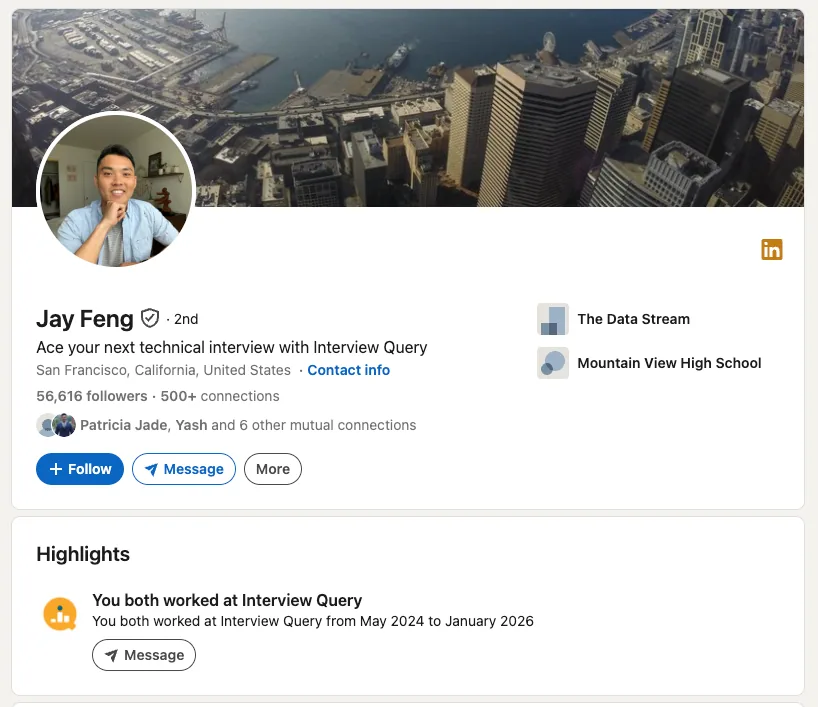
Jay’s Linkedin: https://www.linkedin.com/in/jay-feng-ab66b049/
Context
Interview Query sells interview preparation for data roles. That category has a trust problem built into it: it is crowded with course sellers, and buyers have learned to assume the person behind the product has never actually done the job.
Jay Feng had. He is a working data scientist, and his personal profile carried something a company page cannot manufacture: proof that the platform was built by a practitioner, not by someone with a funnel.
So we made a deliberate call. We barely ran the Interview Query company page. Nearly all social effort went into Jay's personal profile instead.
The starting point:
-
~30,000 followers
-
~15,000 impressions on a typical post
-
No repeatable publishing system
The problem was not reach. It was that the reach was not doing anything. There was no format the audience recognized, and no path from a post to the product.
Insight: Find the Format, Then Know When to Leave It
Reach on LinkedIn does not come from posting more, or from posting smarter. It comes from finding the one format your audience reliably stops for, then running it far past the point where it starts to feel repetitive to you.
The part nobody plans for is the other end. Every format has a shelf life, and the signals that it has expired show up in the data before they show up in your gut.
Key realization: Finding a format that works is the easy half. Knowing when it has stopped working is the half that protects the account.
Strategy: One Format, Run Hard
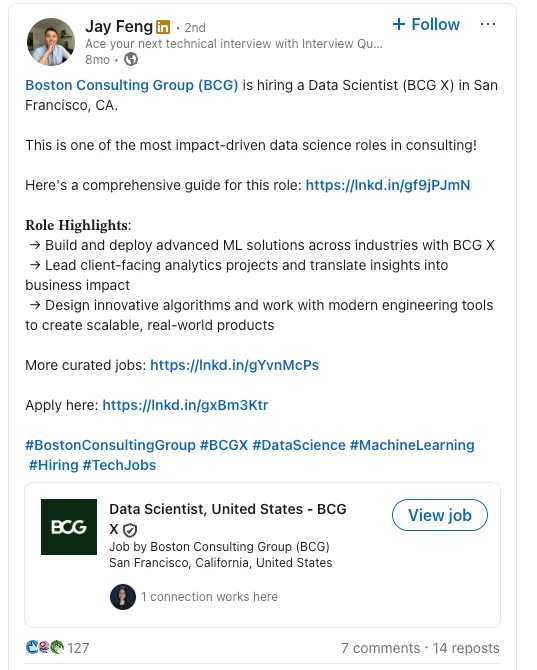
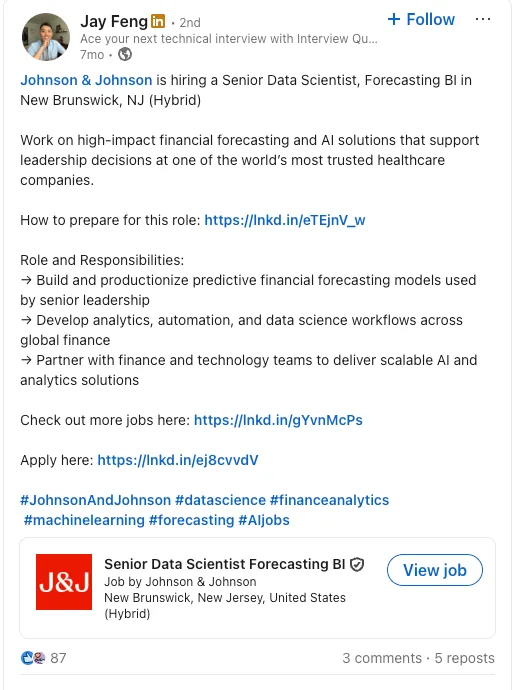
1. The hiring post
We built the channel on a single structure:
[Company] is hiring [Role] → why it is a good place to work → link to Interview Query's preparation materials for that exact role
The hook was deliberately plain: "Company is hiring X role." No curiosity gap, no misdirection, no clever setup. The audience was scanning the feed for opportunities, and the fastest way to stop a job seeker is to name the job.
It worked because it gave value before it asked for anything. The post was genuinely useful even if you never clicked, which is what kept it from reading as promotion.
2. Volume
Two posts a day, sustained. The format was simple enough to produce at that rate without diluting it, which is exactly why it was the right format to scale.
3. A path from post to product
Every hiring post linked to the preparation material for that specific role, not to the homepage. The post handled discovery, the role page handled convincing, and the product handled the rest. It mirrored the funnel logic we were already running on SEO, just with the feed as the entry point instead of search.
4. Supporting content
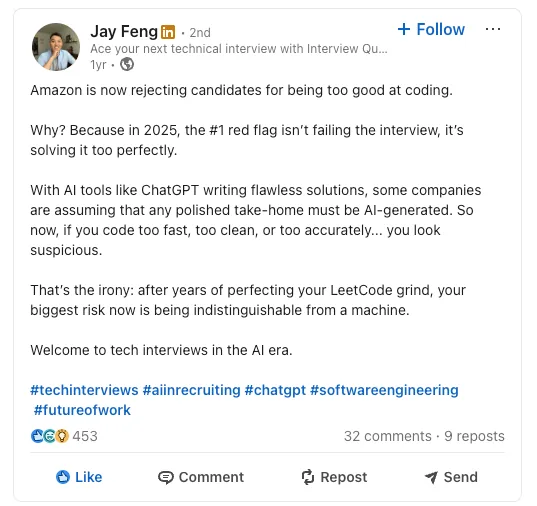
Around the core format we ran interview questions and job market insights. Partly for variety, partly so the profile still read as a data scientist's account rather than a job board.
5. Ownership
I ran LinkedIn end to end as Jay's ghostwriter: angles, drafts, scheduling, and performance review. Jay posted in his own voice whenever he wanted to, which kept the account feeling like a person rather than a channel.
Results of the format: typical post impressions moved from ~15,000 to ~25,000, with the best posts reaching 180,000.
When the Format Started to Die
Two signals showed up:
1. Diminishing new audience. Less new traffic was coming in. Most of the people the format could reach had already joined the platform, so we were increasingly paying attention costs to reach users we already had.
2. Falling engagement, and a dependency we did not control. The format only works in a hiring market. When layoffs outpaced hiring, there were fewer roles worth posting and the audience's mood shifted underneath us.
The second signal mattered more than the first. A format tied to external market conditions is a format you are renting, not one you own.
The Second Act: Research and Live Events
We shifted the account from "who is hiring" to "what is happening in the job market."
-
A monthly job market report built from our own data
-
Webinars for two distinct audiences, job seekers and university guidance counselors, drawing 30 to 50 attendees per session. I promoted 5 of them.
-
Two in-person meetups in California at similar attendance
Job market research was never a significant product line for us. It was a credibility asset. It gave Jay something to say that was not a job listing, and it gave institutions a reason to take a meeting.
Conversion: What the Channel Actually Produced
1. Platform signups. LinkedIn drove thousands of new users over the tenure.
2. Standing inbound. The profile generated 50+ connection requests per day. At that volume the account stops being a publishing channel and becomes a lead source that runs whether or not you posted that morning.
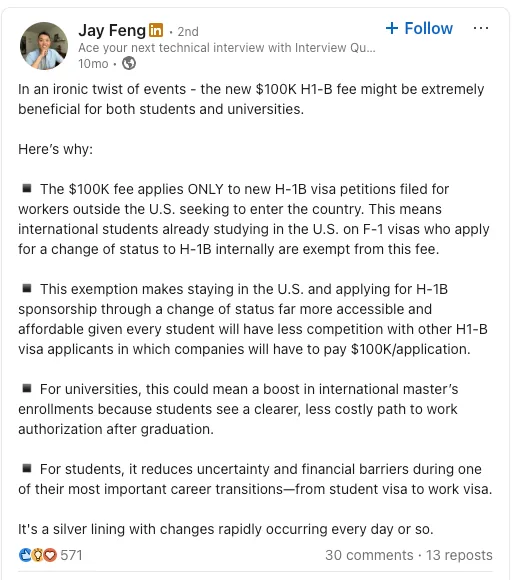
3. Institutional partnerships. The guidance counselor webinars and the job market reports opened a channel we had not originally been targeting: university career services. That produced 10 partners across renewals and new business, totalling $300K in annual revenue.
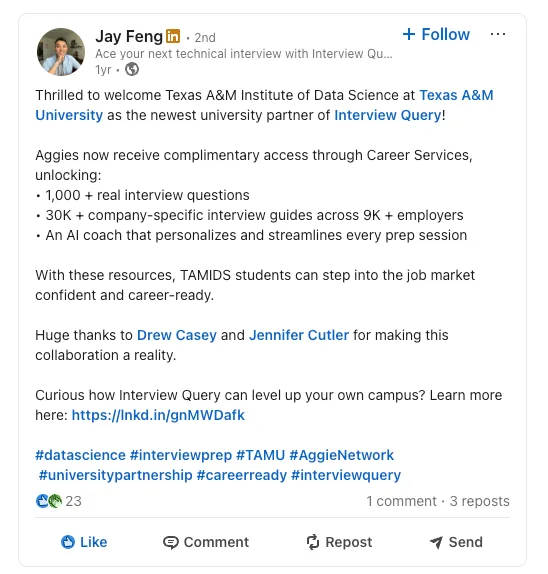
That last one is the point. The audience we built for job seekers ended up selling to institutions.
Results
-
8.7M+ impressions and 39K engagements across the tenure. Treat this as approximate: there were stretches where we paused LinkedIn entirely to concentrate on other channels.
-
Followers: ~30,000 → 50,000 during my tenure (56K today)
-
Typical post: ~15,000 → ~25,000 impressions, with a ceiling of 180,000
-
50+ inbound connection requests per day
-
10 university career services partnerships, $300K in annual revenue
-
Channel rank: behind SEO and YouTube, tied with Reddit for third
Takeaway
Most personal brand work optimizes for:
-
posting consistently
-
sounding impressive
-
chasing whatever hook is working this month
What actually worked:
-
Put the credibility on a person, not a logo. The audience needed to believe the founder had done the job.
-
Find the one format your audience stops for, then run it far longer than feels comfortable.
-
Point every post at a specific product page, never the homepage.
-
Watch for the two death signals, audience saturation and dependence on conditions you do not control, and rebuild before the numbers force you to.
At Interview Query, LinkedIn did not work because we posted more.
It worked because we posted the same right thing, from the right person, until it stopped working, and then had the next thing ready.